
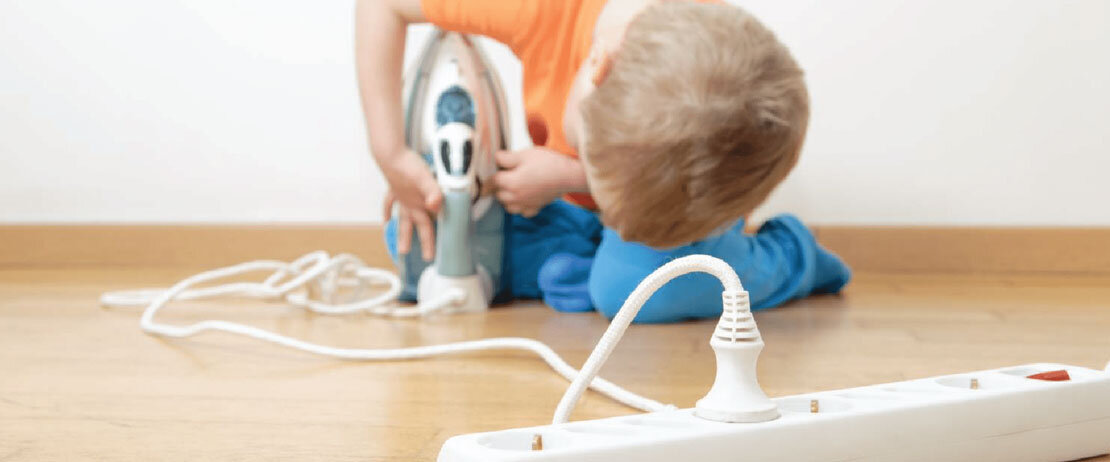
A curious toddler will poke, pull, and prod anything within arm’s reach—especially objects that light up or make a satisfying click. While that sense of exploration fuels healthy development, it also puts small hands dangerously close to outlets, chargers, and appliance cords. A few straightforward safety habits can dramatically reduce the risk of shocks, burns, or worse, letting your child learn and play in a secure environment.
Understand Common Electrical Risks
Electrical dangers lurk in more places than the obvious outlet on the wall. Phone chargers left dangling, loose extension cords under rugs, and small appliances left plugged in near water all pose serious threats to a toddler who moves faster than you can say “no.” Even seemingly harmless night-lights can crack if tugged hard enough, exposing hot prongs.
Knowing where the hazards hide is the first step in eliminating them. Do a room-by-room scan at your child’s eye level, noting every cord, socket, and device within grabbing range, then decide whether that item should be secured, relocated, or removed entirely.
Childproof Outlets and Cords
Once you’ve mapped the risk zones, tackle them methodically. Install tamper-resistant outlet covers that require equal pressure on both openings before electricity flows; they look like standard plates but keep inquisitive fingers out. Replace old power strips with models that have sliding safety shutters, and route excess cord length behind furniture or inside flexible tubing so toddlers can’t yank or chew on them.
Choose cordless blinds and hide TV cables inside wall conduits for a clean, hazard-free finish. These simple upgrades cost little compared with a hospital visit and preserve the tidy look of your living space.
Model Safe Habits Every Day
Toddlers copy everything, from how you hold a spoon to how you unplug the toaster. Always pull a plug by its base, not the cord, and immediately wrap and store appliances after use. Keep drinks away from laptops and charging phones to avoid the lethal mix of water and electricity.
Explain in plain language what you’re doing—“Mommy is turning this off because electricity can hurt”—so your child links the action with the reason. Consistency turns safety rules into second nature for both of you, shrinking the chance of a forgotten cord or live outlet in the daily rush.
Teach and Supervise With Intent
Even the best childproofing can’t replace watchful eyes and calm instruction. Introduce basic concepts early: outlets are “only for plugs,” and cords are “not for playing.” When a toddler reaches for a forbidden socket, redirect them to a safer hands-on activity—building blocks, shape sorters, or a supervised craft.
Parents who crave extra guidance may consider enrolling their little one in a Montessori toddler program, where the environment is purposefully prepared for age-appropriate exploration and safety is woven into every lesson. Such reinforcement outside the house helps children understand boundaries wherever they roam.
Conclusion
Preventing electrical accidents is less about fancy gadgets and more about awareness, preparation, and everyday discipline. Scan each room from a toddler’s viewpoint, secure or remove hazards, demonstrate safe behavior, and stay present as your child explores. With these measures in place, your home becomes a laboratory of discovery—not danger—allowing your toddler to grow confident and curious without the shock.
