
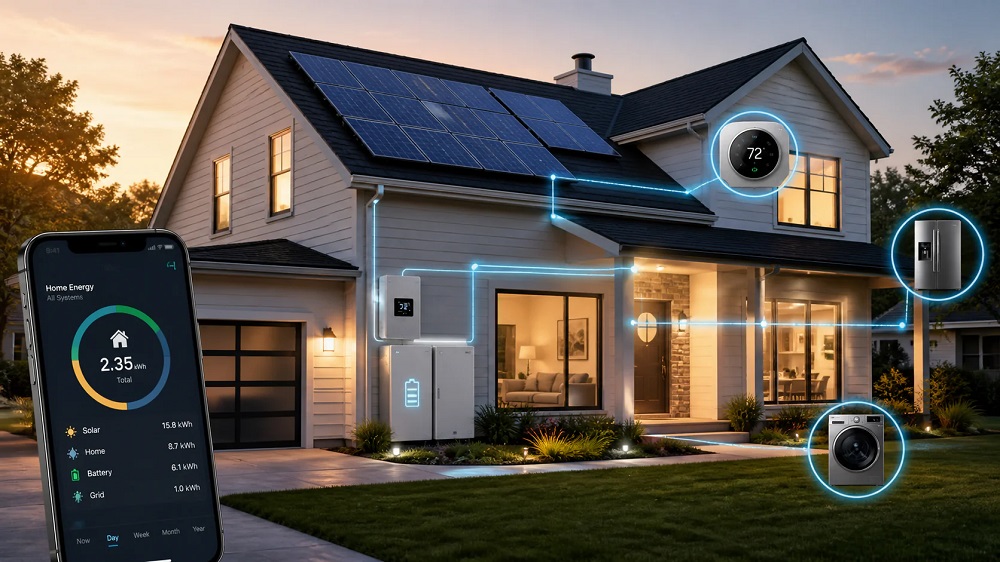
Energy resilience is often discussed in the context of outages, storms, or extreme weather events. While backup power remains an important part of that conversation, the meaning of resilience inside the modern home can extend beyond emergencies. Many households are paying closer attention to how energy systems perform under everyday uncertainty, not only during rare disruptions. As one of the nation’s largest residential solar providers, Freedom Forever Solar operates in a market where solar systems are increasingly paired with monitoring tools and other technologies intended to give homeowners more visibility into when and how grid power is used.
As grid conditions become less predictable, resilience has taken on a more practical dimension. Smart solar homes are often associated with adaptability, coordination, and clearer visibility into system performance. These qualities can influence how energy systems support daily life long before an outage occurs. In this broader sense, resilience reflects how smoothly a home may adjust to changing conditions rather than how it responds to a single event.
Resilience Beyond Backup Power
Traditional definitions of energy resilience focus on keeping essential systems running during outages. Batteries and backup solutions address that need, but they represent only one dimension of resilience. Resilience also includes the ability to adapt before disruptions occur. Smart energy systems anticipate stress points and adjust operations to minimize impact.
Solar-powered smart homes support resilience through daily stability. By shifting energy use to align with production and smoothing demand throughout the day, households reduce strain on both their systems and the grid. This approach emphasizes continuity. Homes operate steadily across normal conditions, reducing reliance on reactive measures and supporting consistent performance.
Adaptability as a Core Feature
Adaptability sits at the center of modern energy resilience. Smart platforms respond to changes in weather, occupancy, and usage patterns without requiring manual intervention. This responsiveness allows homes to maintain stability during unexpected shifts or disruptions. Systems can reallocate energy resources to prioritize essential needs when conditions fluctuate. Over time, adaptability strengthens both efficiency and reliability in everyday energy management.
Solar production fluctuates naturally. Connected systems adjust in response. Appliances shift schedules. Climate systems respond gradually. Stored energy supports transitions. These responses reflect preparation rather than reaction. Systems adapt to how households live instead of forcing routines to conform to fixed assumptions.
Demand Shifting Reduces Exposure
Demand shifting plays an important role in resilient energy management. Solar production peaks during daylight hours, while household demand often rises later in the day. Smart scheduling helps bridge this timing gap by moving flexible energy use closer to production peaks. Batteries and automated controls store or redirect excess energy for later use. This approach reduces strain on the grid while improving overall system resilience.
Smart homes reduce this mismatch by shifting certain activities to periods of higher production. Laundry, water heating, and device charging occur when solar output is stronger. These adjustments limit reliance on grid power during peak periods, when pricing pressure and instability tend to increase. Demand shifting spreads energy use more evenly, supporting smoother operation.
Smart Coordination Supports Stability
Resilient homes rely on coordination across systems. Lighting, climate control, appliances, and storage function as parts of a unified system rather than independent components.
Solar provides the production context that guides this coordination. When systems share information, homes respond more smoothly to change. Sudden demand increases can be balanced. Stored energy supports continuity. Coordination reduces strain and supports steady performance as conditions fluctuate.
Reduced Dependence on the Grid
One practical benefit of solar-powered smart homes is reduced dependence on the grid. While full independence is uncommon, selective reliance shapes resilience meaningfully.
Homes draw less power during peak demand periods. Stored energy supports evening routines. Smart scheduling aligns usage with production. Together, these factors limit exposure to external instability. Reduced dependence does not require isolation. Homes remain connected to the grid while engaging with it more intentionally.
Visibility Shapes Preparedness
Visibility supports resilience because it helps homeowners understand what the home is doing before anything feels urgent. Monitoring tools show how the system performs on normal days and how it behaves when conditions change, so families are not guessing when something looks different.
Homeowners can see when the home is running on solar, when the battery is carrying the load, and when the grid is filling in. That context makes planning easier and keeps small adjustments practical instead of reactive. Freedom Forever reviews often mention strong communication and easy access to system information, with homeowners pointing to the reassurance that comes from seeing how power moves through the home during routine operation and during less predictable periods.
Storage as a Supporting Layer
Energy storage strengthens resilience by adding flexibility. Batteries store excess solar production and make it available when generation slows.
Smart platforms manage storage based on household priorities. Stored energy supports evening routines and periods of lower production. Storage works most effectively when coordinated with monitoring and automation. This integration keeps behavior predictable and supports stability without added effort.
Planning for Change Over Time
Resilience also reflects a home’s ability to adapt over time. Households change as schedules shift, occupancy evolves, and energy needs grow.
Monitoring data highlights long-term trends. Families see how energy use changes across seasons or life stages. This insight supports proactive planning for upgrades or efficiency improvements. Homes adjust with intention rather than urgency.
A Broader View of Energy Security
Energy resilience in a solar-powered smart home reflects a broader view of security. It emphasizes adaptability, coordination, and awareness rather than singular events.
Homes rely less on rigid systems. They respond to variability with insight and flexibility. Solar supports this approach by pairing predictable production with responsive management. Resilience becomes part of daily operation rather than a contingency plan.
Redefining Resilience at Home
Solar-powered smart homes have reshaped what energy resilience means. It no longer centers only on outages. It reflects how homes manage energy across changing conditions, shifting demand, and evolving needs.
Through adaptability, coordination, and visibility, households gain steadier control over how energy supports daily life. Systems respond to real conditions rather than fixed assumptions. Resilience becomes a continuous quality, embedded in everyday living and supported by systems designed to adjust, balance, and perform consistently over time.
