
5
The modern residential bathroom has shifted from a purely utilitarian space into a personal wellness retreat. Where homeowners once settled for standard fiberglass tub inserts, basic vanity mirrors, and harsh fluorescent bars, the focus today centers on tactile comfort, therapeutic sensory design, and calm efficiency. Bringing spa design principles into your private home creates a daily buffer against the relentless pace of modern life, turning standard morning showers and evening routines into restorative rituals.
Designing an authentic spa bathroom goes beyond surface aesthetics. True luxury requires deliberate material choices, ergonomic configurations, and integrated climate controls that interact seamlessly with water and warmth. By blending structural engineering updates with deliberate sensory design, you can create a sanctuary that nurtures both body and mind.
The Sensory Architecture of a High-End Shower
The shower remains the central fixture of daily personal care. Upgrading from a cramped shower enclosure to an open, multi-functional wet room instantly alters the ambiance of the entire bathroom.
-
Curbless Entry and Frameless Glass: Eliminating raised thresholds produces an unbroken floor line that makes the room appear considerably larger. Paired with ultra-clear frameless glass partitions, this design promotes an airy aesthetic while remaining accessible across all stages of life.
-
Dual-Delivery Water Systems: A comprehensive shower assembly balances high-coverage overhead drenching with targeted directional spray. Mount an oversized ceiling-recessed rain shower head to simulate a natural downpour, and pair it with a multi-setting handheld wand on a slide bar to simplify targeted rinsing and enclosure cleaning.
-
Integrated Thermostatic Valves: Rather than juggling two separate knobs to dial in temperatures every morning, thermostatic mixing valves maintain a pre-set water temperature within a fraction of a degree. This guarantees steady, scalding-free comfort even if water fixtures run elsewhere in the home.
-
Floating Stone Benches and Recessed Niches: Incorporating a cantilevered bench built from solid quartz, marble, or teak provides a resting spot for hydrotherapy treatments and personal grooming. Seamlessly built-in, backlit wall niches eliminate plastic shampoo bottles from the floor, preserving clean sightlines.
Residential Steam Systems: Daily Hydrotherapy at Home
Few additions capture the indulgence of a commercial day spa quite like a private residential steam room. Transforming a shower enclosure into an airtight steam chamber delivers deep muscle relaxation, respiratory clearance, and gentle cardiovascular stimulation without leaving your home.
Building an effective residential steam shower requires dedicated technical consideration. The enclosure must be completely sealed from floor to ceiling using vapor-impermeable membranes beneath the tile work. The ceiling should slope at least two inches per foot to prevent condensed steam droplets from collecting overhead and dripping down cold onto bathers.
The heart of the setup is an electric steam generator, typically hidden away within a nearby vanity cabinet, walk-in closet, or mechanical room up to twenty-five feet away. Controlled through an in-shower digital touch interface, modern generators fill the stall with thick, heated vapor within sixty seconds. Many systems now offer integrated aromatherapy reservoirs directly inside the steam head, allowing you to diffuse eucalyptus, lavender, or mint oil vapors into the hot steam mist to elevate relaxation.
Freestanding Soaking Tubs as Sculptural Centerpieces
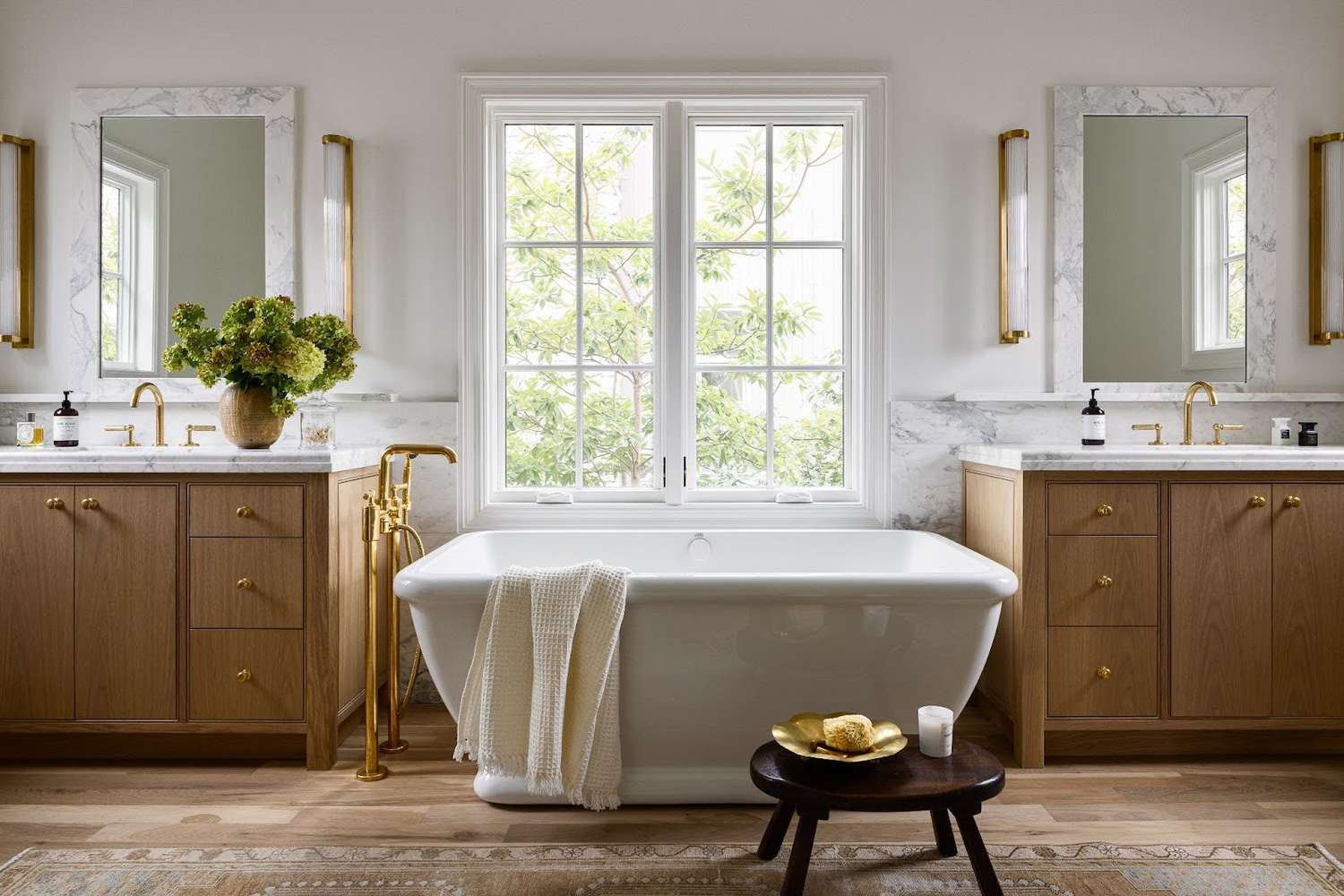
While fast-paced morning routines favor high-performance showers, long evening wind-downs demand the slow comfort of a dedicated soaking tub. Modern luxury bathrooms often separate the tub entirely from the shower stall, establishing it as a sculptural focal point in the room.
-
Solid Surface Composites: Cast mineral composite resin tubs blend crushed natural stone with high-grade polymers. These tubs retain heat substantially longer than lightweight acrylic models, and their non-porous matte or satin finishes are smooth, stain-resistant, and pleasant against bare skin.
-
Japanese Soaking Profiles: For bathrooms where square footage is tight, deep Japanese soaking tubs, known as ofuro, provide an immersive bathing posture using a smaller footprint. By substituting depth for length, these tubs let you submerge your shoulders fully in hot water while maintaining an upright, seated posture.
-
Floor-Mounted Tub Fillers: Pairing a freestanding tub with an elegant floor-mounted brass or matte black gooseneck filler completes the visual aesthetic. Choosing a faucet that includes a built-in diverter wand makes hair washing and tub rinsing simple.
Thermal Comfort and Radiant Heating
The feeling of physical warmth is the cornerstone of true relaxation. Nothing shatters post-bath comfort faster than stepping onto an icy tile floor or wrapping yourself in a damp, chilly towel.
Electric radiant floor heating cables installed underneath stone or porcelain tile convert the entire floor into an efficient thermal radiator. Running on independent programmable thermostats, radiant floors can be timed to warm up thirty minutes before your morning alarm goes off. Radiant heating eliminates airborne drafts common with forced-air systems and dries standing puddles quickly, preventing slips and mold development.
Wall-mounted hydronic or electric towel warmers provide that distinct resort-level feeling of stepping out of the shower into a dense, heated towel. Available in minimal flat-panel ladder formats or vertical sculptural bars, heated towel racks alsoMeta Title: Spa-Inspired Bathroom Features to Elevate Your Daily Routine
Meta Description: Discover how to transform your bathroom into a luxury home spa. Explore features like rainfall showers, radiant heat, steam units, and organic materials.
Spa-Inspired Bathroom Features to Transform Your Daily Routine
A bathroom is rarely just an area of utility anymore. For many homeowners, it serves as the sole threshold between the frantic pace of the outside world and personal restoration. Converting this square footage into a private wellness sanctuary does not require a commercial resort footprint; rather, it demands thoughtful design choices centered on sensory renewal, functional efficiency, and organic textures. By integrating deliberate fixtures and materials, you can establish an environment that lowers your heart rate the moment you cross the threshold.
Experiential Hydrotherapy
Water delivery defines how effectively a bathroom soothes tired muscles and calms an overstimulated mind. Modern hydrotherapy fixtures offer precise control over pressure, temperature, and coverage, allowing you to tailor your morning wake-up or evening unwind.
-
Ceiling-Mounted Rainfall Showerheads: Unlike traditional angled fixtures that concentrate high pressure on a single small point, flush-mounted rain panels deliver a broad, gentle downpour powered by gravity and aeration. Look for models with integrated air injection systems, which blend air with water to create full, soft droplets without wasting gallons per minute.
-
Thermostatic Smart Valves: Eliminating the annoyance of fluctuating water temperature is fundamental to a luxury environment. Thermostatic digital valves maintain your preferred heat setting within fractions of a degree, allowing you to start pre-programmed routines with a single touch or voice prompt.
-
Ergonomic Freestanding Tubs: A sculptural soaking tub acts as both a visual centerpiece and a deep-immersion vessel. Materials like cast stone and volcanic resin retain water warmth far longer than standard acrylic, preventing the need to constantly refill the basin during extended soaks.
Advanced Warmth and Thermal Comfort
Stepping out of warm water onto an icy tile surface abruptly shatters any tranquil mood. Thoughtful thermal infrastructure ensures warmth follows you through every phase of your personal care routine.
-
Electric Radiant Floor Heating: Installing heating mats directly beneath tile, stone, or engineered hardwood creates an evenly distributed heat profile across the room. Programmable thermostats can warm the floor thirty minutes before your alarm sounds, establishing a comfortable foundation on cold winter mornings.
-
Hardwired Towel Warmers: Beyond merely warming bath linens, wall-mounted heated rails keep towels dry and free of musty odors throughout the week. Choose multi-bar serpentine designs to accommodate multiple bath sheets alongside hand towels.
-
In-Shower Steam Generators: Enclosing your shower stall with floor-to-ceiling glass and adding a compact vapor generator introduces the detoxifying properties of a commercial Turkish bath directly into your master suite. These units generate dense steam in under a minute, loosening tight joints and clearing airways.
Layered and Circadian Lighting
Standard bathrooms frequently depend on aggressive overhead fluorescent or cold LED lights that shock the eyes early in the morning and interfere with sleep cycles at night. A wellness-driven approach incorporates layered illumination that adapts to natural human chronobiology.
-
Concealed Architectural Cove Lighting: Tucking low-output LED strips behind floating vanities, drop ceilings, or baseboards casts a gentle, indirect ambient wash. This provides sufficient guidance for nighttime visits without forcing your pupils to contract.
-
Perimeter-Lit Vanity Mirrors: Eliminate harsh facial shadows caused by top-down vanity bars by installing mirrors with integrated, forward-facing diffusion channels. High Color Rendering Index (CRI 90+) bulbs ensure makeup application and shaving happen under natural, true-to-life tones.
-
Tunable White Controls: Systems that shift automatically from cool, bright light in the morning to warm amber hues in the evening help preserve melatonin production, supporting deeper sleep once you finish your nighttime skin routine.
Organic Materials and Biophilic Elements
Human beings respond positively to natural textures, earthy tones, and living vegetation. Designing with biophilic concepts anchors the space, making it feel grounded rather than sterile.
-
Textured Natural Stone: Honed slate, travertine, river pebbles, and unpolished marble bring tactile variety underfoot and across feature walls. Honed finishes also offer superior slip resistance compared to high-gloss polished surfaces.
-
Warm, Moisture-Tolerant Woods: Teak, cedar, and thermally treated ash introduce rich warmth that balances cool ceramic tiles. Utilize slatted wood shower pans, floating timber benches, or solid wood cabinetry finished with natural oils.
-
Integrated Living Walls and Greenery: Incorporating plants that thrive in high-humidity environments—such as bird’s nest ferns, snake plants, and philodendrons—cleans the air while softening sharp architectural angles. Recessed wall niches with dedicated grow lights allow living greenery to flourish even in windowless layouts.
Acoustic Dampening and Silent Storage
Visual and auditory noise directly counteracts relaxation. A tranquil retreat requires deliberate strategies to suppress mechanical noises and eliminate everyday clutter.
-
Whisper-Quiet Ventilation: Loud, grinding exhaust fans discourage use, which leads to mold growth and breaks peaceful silence. Modern inline remote blowers or premium ultra-quiet ceiling fans operate under 0.3 sones, exhausting moisture without noticeable sound.
-
Internal Electrical Outlets in Drawers: Countertops strewn with toothbrushes, hair dryers, and grooming accessories create visual clutter. Deep pull-out vanity drawers outfitted with built-in power strips keep heavy-use appliances plugged in, accessible, and completely hidden from view.
-
Soft-Closing Solid Hardware: Heavy, slow-closing doors and dampers on drawers prevent jarring slams that ruin a calm atmosphere. Pair these with solid-core bathroom doors insulated with rockwool to block hallway sounds.
Integrated Aromatherapy and Water Filtration
The final touches of a high-end personal oasis focus on unseen details: the purity of the water touching your skin and the scents carrying through the air.
-
In-Line Whole-House or Shower Filters: Municipal tap water often carries trace chlorine, chloramines, and heavy minerals that dry out hair and irritate sensitive skin. Multi-stage inline filters remove these elements, ensuring every shower leaves skin soft and hydrated.
-
Built-in Diffuser Niches: Installing subtle, wall-recessed essential oil diffusers or choosing steam heads with dedicated reservoirs allows you to infuse the air with eucalyptus, lavender, or bergamot. Controlled diffusion delivers consistent, light fragrance without the fire hazard of open candles.
Frequently Asked Questions
Will adding a steam shower create mold issues in my home?
A properly specified steam shower will not cause moisture damage if built correctly. It requires a completely vapor-proof membrane beneath all tile surfaces, a sloped ceiling to shed condensation back down the walls, and a dedicated, sealed glass door. High-performance mechanical ventilation must also be installed nearby to vent humid air directly outdoors once the door is opened.
How much clearance do I need around a freestanding tub?
To avoid an overcrowded aesthetic and to make cleaning practical, aim for at least twelve to eighteen inches of open clearance between the tub edge and adjacent walls or fixtures. Placing a freestanding tub tightly against a wall diminishes its visual appeal and creates difficult-to-reach pockets that trap dirt and moisture.
Does radiant floor heating take a long time to warm up?
Electric radiant floor systems usually take between thirty and sixty minutes to heat tile from ambient room temperature to a comfortable warmth, depending on subfloor insulation and tile thickness. Smart programmable thermostats solve this delay by turning the system on automatically ahead of your planned morning or evening routine.
What wood species withstand high bathroom humidity best?
Teak is the premier choice due to its high concentration of natural oils and silica, which naturally repel water, rot, and insects. Western red cedar, cypress, and hinoki cypress also perform exceptionally well under high moisture levels, requiring minimal chemical treatments to maintain structural integrity.
Can whole-house water softeners replace shower-specific filters?
A water softener removes hard minerals like calcium and magnesium to prevent scaling, but it does not remove chlorine, VOCs, or chemical odors. If your water has noticeable chemical tastes or drying agents, you will still need a carbon or KDF-based filtration system in conjunction with your water softener to protect your hair and skin.
Are pocket doors appropriate for an en-suite bathroom retreat?
Standard hollow-core pocket doors often offer poor acoustic isolation and can rattle within their tracks. If your layout requires a pocket door to maximize usable floor area, invest in a heavy, solid-core slab mounted on heavy-duty commercial track hardware, fitted with brush perimeter seals to block both light leaks and sound transmission.
