
17
Every gardener eventually encounters the challenge of a low-light yard. Whether caused by towering mature trees, the shadow of a two-story home, or an enclosed urban courtyard, shade can initially feel like an obstacle to growing a lush landscape. Many people assume low-light plots are doomed to sparse patches of moss, muddy mulch, and fading grass.
In reality, shade presents an incredible design opportunity. Low-light gardens naturally retain soil moisture longer than sun-scorched beds, suffer far less heat stress during summer peaks, and allow for sophisticated textures that would otherwise bleach out under direct ultraviolet exposure. By learning the subtle gradations of shadow, understanding soil needs, and selecting plants engineered by nature to thrive on the forest floor, you can convert dimly lit corners into tranquil, layered woodland retreats.
Understanding the Spectrum of Garden Shade
Before heading to the nursery, you need to map how light moves across your property throughout the day. Shade is rarely uniform, and choosing the right plant depends on matching it to the precise type of cover your space receives.
-
Dappled or Filtered Shade: Sunlight filters through open, shifting overhead canopies, such as honey locust or birch trees. Plants receive flecks of moving light throughout the day. This condition supports the widest variety of understory plants.
-
Partial Shade: The area receives two to four hours of direct sun, usually in the cool morning or late afternoon, while remaining shaded during the intense heat of midday. Many woodland flowering species thrive in this zone.
-
Full Shade: The location receives less than two hours of direct sun each day, or only indirect reflected light from nearby surfaces. The soil beneath dense canopies like Norway maple or along northern building walls falls into this category.
-
Deep or Dense Shade: Almost no direct light penetrates. This occurs under evergreen conifers, broad structural overhangs, or narrow alleyways between structures. Plant choices here must rely primarily on specialized foliage groundcovers.
Architectural Foliage Plants for Deep Texture
In full-sun gardens, flowers often carry the visual burden. In a shade garden, foliage serves as the primary design anchor. Leaves with varied profiles, surface sheens, and color variegations create structural interest that lasts from early spring straight through late autumn.
Hostas for Sculptural Presence
Hostas remain the foundation of temperate shade gardening for good reason. They produce broad, ribbed leaves that range from compact cushions to giant four-foot mounds. Cultivars like Sum and Substance offer bright chartreuse leaves that visually illuminate dark understories, while varieties such as Halcyon provide powdery, cool blue-gray tones that create visual depth. Variegated cultivars, which feature cream or white margins surrounding deep emerald centers, break up the uniformity of dark backgrounds.
Ferns for Airy Contrast
Ferns provide the ideal featherweight textural counterpoint to broad-leafed perennials. Species like the native Christmas fern and the delicate maidenhair fern offer intricate, divided fronds that flutter in subtle breezes.
-
Japanese Painted Fern: This deciduous favorite introduces dramatic metallic silver tones accented with burgundy midribs, bringing an artistic contrast to rich green plantings.
-
Ostrich Fern: Known for its tall, vase-shaped architectural fronds, this hardy plant creates bold verticality in moist, dappled depressions.
-
Autumn Fern: The new growth of this semi-evergreen variety unfurls in warm copper and bronze shades before maturing into a deep, glossy green, ensuring multi-season color shifts.
Coral Bells and Foamflowers
Coral bells and their botanical cousins, foamflowers, offer incredible color variety beyond standard greens. Modern hybridization has produced foliage varieties in shades of deep plum, amber, caramel, lime, and frosted silver. Their lobed leaves form tidy mounds that suppress weed growth along shaded borders, while wiry stems send up delicate clouds of tiny bell-shaped blooms in late spring.
Brilliant Flowering Perennials That Brighten the Shade
A garden without full sun does not have to be devoid of flowers. Many woodland perennials produce breathtaking blooms by taking advantage of the early season light before tree leaves fully emerge, or by relying on bright, reflective floral tones that attract forest pollinators.
-
Bleeding Heart: A classic cottage favorite, the old-fashioned bleeding heart produces arching stems draped in pendant, heart-shaped pink or pure white blossoms throughout late spring. In warmer climates, it goes dormant in midsummer, making it a great companion to late-spreading ferns.
-
Astilbe: Prized for their feathery, plume-like flower spikes, astilbes thrive where soil remains consistently moist. Their blooms come in shades of blush pink, lavender, pure white, and fiery crimson, contrasting gracefully with their fern-like, divided foliage.
-
Columbine: With distinct spurred petals and two-tone color patterns, native and cultivated columbines nod gracefully atop slender stems. They naturalize well in dappled borders and attract woodland pollinators such as bumblebees and early hummingbirds.
-
Japanese Forest Grass: While not technically a flower, this graceful grass produces weeping mounds of golden, bamboo-like blades that sweep along the ground. Its yellow and gold tones catch faint light, introducing kinetic motion and warmth along shaded garden walks.
-
Toad Lily: Blooming in late summer and early autumn when most garden flowers have finished, toad lilies resemble miniature orchids with intricate speckling in shades of violet, white, and blue.
Overcoming Dry Shade and Tree Root Competition
One of the most frustrating low-light environments is dry shade. This condition commonly occurs beneath mature deciduous trees with greedy, fibrous root networks, such as maples, oaks, and beeches. These trees act as large umbrellas that shed rainfall outward while their surface roots drink up available moisture and nutrients.
To establish plants in dry shade, do not attempt to dig massive planting holes that cut through primary structural tree roots, as this damages the tree and destabilizes your canopy. Instead, locate small planting pockets between major root flares.
Enrich these small pockets with well-rotted leaf mold, aged compost, or composted pine bark to build organic matter without suffocating existing tree roots. Apply a two-inch layer of natural arborist wood chips across the surrounding soil bed to retain moisture, moderate soil temperatures, and reduce evaporation.
For these harsh, competitive sites, choose tough, drought-tolerant shade performers such as sweet woodruff, epimedium (barrenwort), wild ginger, and bigroot geranium. Once established, these rugged groundcovers spread via rhizomes to form dense, living carpets that outcompete opportunistic weeds.
Designing Layered Compositions in Dim Spaces
Successful shade gardening relies on visual contrast. Because ambient light levels are low, dark foliage colors like forest green or deep navy tend to disappear into shadowy borders.
-
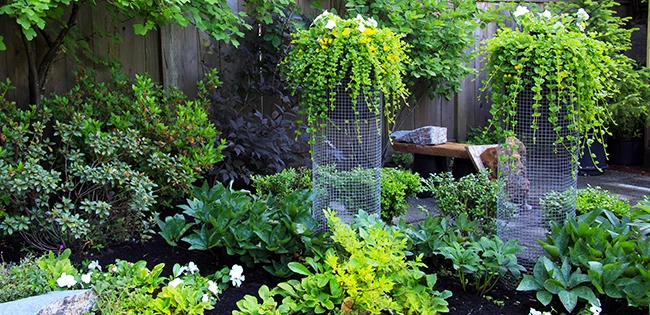
Employ Light-Reflecting Hues: Use plants with silver veining, creamy margins, and golden foliage near the back of borders or along darkened fence lines. These lighter colors bounce ambient light forward and create the optical illusion of greater space.
-
Vary Leaf Scales: Place large, leathery hosta leaves directly beside the finely cut, delicate leaflets of astilbes or maidenhair ferns. The dramatic shift in physical scale forces the eye to notice distinct layers.
-
Use Light-Colored Hardscaping: Natural light-toned stone, light river pebbles, or natural birch wood garden structures reflect light upward into the plant canopy, softening dark corners.
-
Add Reflective Water Accents: A shallow stone birdbath or a simple tabletop water bowl captures light filtering through the tree branches above and mirrors the sky, adding brightness to the understory.
With thoughtful plant choices and careful attention to soil health, shaded parts of your landscape can become the most inviting, serene areas of your property.
Frequently Asked Questions
How does watering need to be adjusted for shade gardens compared to sunny beds?
Shade beds generally lose far less water to surface evaporation than sun-drenched gardens, meaning open shaded soil stays moist longer. However, if your shade garden sits under a dense tree canopy, tree roots consume enormous quantities of soil water, often creating arid soil conditions even after rainfall. Check moisture three inches below the soil surface with your finger rather than relying on the appearance of the topsoil before deciding to water.
Can flowering annuals perform well in full shade?
Yes, several annuals bloom prolifically without direct sun. New Guinea impatiens, wax begonias, fuchsias, and wishbone flowers (torenia) produce consistent color from late spring until the first frost in full to partial shade, provided they receive regular moisture and light fertilization.
What causes hosta leaves to get ragged holes in low-light environments?
Shaded, damp garden conditions create ideal habitats for garden slugs and snails, which feed on hosta foliage during the night. You can manage slug populations by spreading iron phosphate bait granules around emerging shoots, applying food-grade diatomaceous earth around plant crowns, or setting out shallow saucers of yeast water to trap them.
Are there any edible crops or herbs that can grow in shade?
While fruiting crops like tomatoes and peppers require full sun to develop sugars, many leafy greens and woodland herbs produce well in partial shade. Spinach, kale, Swiss chard, arugula, mint, cilantro, and chives tolerate low-light settings and often benefit from the cooler temperatures, which prevents them from bolting prematurely.
Will evergreen shrubs survive along a north-facing foundation wall?
Several hardy evergreen shrubs do well along north-facing walls with zero direct sunlight. Japanese yews, boxwoods, mountain laurels, and varieties of inkberry holly retain dense foliage in full shade, making them dependable choices for foundation plantings and architectural hedging.
How do I prevent moss from taking over my shade garden beds?
Moss thrives in conditions characterized by dense shade, soil compaction, poor drainage, and low soil pH. To encourage perennial growth over moss, aerate compacted soil, incorporate organic compost to improve drainage, and run a soil test to determine if agricultural lime is needed to raise the pH. If moss grows naturally without choking out your perennials, consider leaving it as a zero-maintenance, velvety groundcover.
Can variegated shade plants lose their light patterns if the light is too low?
Yes, when placed in excessively deep shade, many variegated cultivars ramp up chlorophyll production to capture whatever trace light is available. This process causes leaves to revert toward solid, dark green. If your variegated coral bells, hostas, or grasses begin losing their cream or gold markings, transplant them to an area that receives dappled light or morning sun.
